
AI-Based STD Testing Lab in Nepal — Honest Technology Assessment Where Automation Genuinely Helps — and the Chain That Still Decides Accuracy
AI-assisted STI testing at Thamel Clinic — honest about what technology improves and where clinical chain still determines whether a result is trustworthy.
Medically Reviewed Content
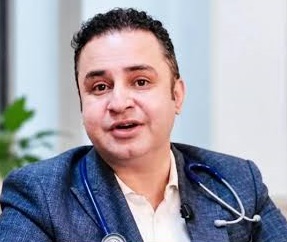
Reviewed by: Dr. Sushil Sitaula (MBBS, MD - Internal Medicine)
Last medical review: June 1, 2026
Next scheduled review: December 1, 2026
This content follows evidence-based medical guidelines and is regularly updated to reflect current medical practices.
AI-Based STD Testing — What to Know
- AI assists interpretation: flags ambiguous results for human review.
- The methods are unchanged: NAAT and serology — AI augments, not replaces.
- Human oversight matters: clinicians make final decisions.
AI Testing Claims in Kathmandu
- Automation where it helps — standardized handling, QC flags, image analysis.
- The chain decides accuracy — test selection, specimen, timing, interpretation.
- AI does not diagnose — clinical read is not automated.
- Honest framing — what technology does and does not change, stated plainly.
What "AI-Based Testing" Actually Is
AI-assisted laboratory testing covers real things and real limits. Real things: image analysis in microscopy (automated cell identification assisting pathologist), automated assay handling that reduces manual error, pattern recognition in cytology and specimen QC. Real limits: test selection, specimen choice, timing and clinical interpretation remain human decisions that no algorithm makes.
The honest framing at Thamel Clinic: we use validated automated processes where they genuinely improve reliability — standardized handling, barcode tracking, automated QC flags — and are honest that accuracy comes from clinical chain (right test, right specimen, right timing, right interpretation), not from an "AI-powered" label on analyzer.
This page is for patients comparing services that claim technological advantage: question to ask any laboratory is not whether it uses AI but whether chain that determines accuracy is intact — which this page addresses honestly.
This page covers AI-Based STD Testing Lab in Kathmandu — confidential, non-judgmental care. Correct evaluation comes first: the actual condition or need determines which approach is appropriate, and the plan is matched to the real cause rather than generic advice. An AI-based STD testing laboratory uses artificial intelligence to interpret results — flagging ambiguous results, predicting window periods, and assisting with clinical correlation. The laboratory methods remain the same; AI augments interpretation.
Where the Technology Genuinely Helps
Automation reduces manual error: barcode specimen tracking prevents wrong-patient result, standardized assay handling produces consistent processing, and automated QC flags detect out-of-control runs before they produce wrong results. This is real improvement — kind that matters for whether a result can be trusted.
Image analysis assists microscopy and cytology — automated image recognition flagging suspicious cells and standardizing reads — as a layer alongside human expert rather than instead of.
Automation
Standardized handling — reduced manual error.
Specimen Tracking
Barcode ID — right result for right patient.
QC Flags
Automated quality control catches drift.
Image Analysis
Microscopy/cytology assistance — supporting expert.
Where It Does Not — the Chain That Decides Accuracy
The parts that determine whether a result is trustworthy are not parts a machine upgrades: right test selection (a sophisticated analyzer on wrong specimen is a sophisticated wrong answer), right specimen (no automation fixes a urine test for a throat exposure), right timing (no AI outruns a window period), and right interpretation ( clinical read is not automatable).
The "AI-powered" label does not change these — a result is trustworthy because chain is intact, not because analyzer has a modern-sounding name.
Right Test
A clinical decision — not a machine one.
Right Specimen
No automation fixes a wrong-site collection.
Right Timing
Windows are biological, not computational.
Right Interpretation
The clinical read is still human.
The Accuracy That Actually Matters
The laboratory quality that determines trustworthiness: correct specimen identification (barcode tracking), controlled assays (QC run alongside patient samples detecting drift), validated methods (established assay performance, not improvised), and review before release (an abnormal that does not fit is queried, not shipped).
These are process components — the "AI" is where it genuinely adds (automation, image analysis); accuracy itself comes from chain being intact regardless of label on analyzer.
Specimen ID
Barcode tracking — right result for right patient.
QC on Assays
Controls detect drift before it produces error.
Validated Methods
Established assay performance.
Reviewed Release
Abnormals checked before reporting.
Interpretation — the Part That Is Still Human
The interpretive layer is where clinical value lives: a result read against window, specimen, prior treatment, symptoms — and answered with what it means and what next step is. This is not automatable in way a number is.
At Thamel Clinic every result carries that interpretation — honest framing of what test can and cannot tell you, whether confirmation is needed, and what plan is — because a laboratory result without interpretation is half a service.
Contextual Read
Result + timing + specimen + history.
Confirmatory Steps
Reactive screens confirmed before conclusions.
Retest Guidance
Where timing or borderline results warrant.
Clear Next Step
Every result arrives with what to do about it.
AI-Based STD Testing Lab
AI interpretation
Artificial intelligence assists with result interpretation.
Ambiguous results
AI flags results needing human review — the safety net.
Same laboratory methods
NAAT and serology — the methods are unchanged.
Human oversight
AI augments, not replaces — clinicians make final decisions.
Laboratory Services & Costs
| Service | What It Includes | Cost (NPR) |
|---|---|---|
| STI testing | NAAT and serology — correct specimens | Lab rate |
| General panels | Hematology, biochemistry, hormones | Lab rate |
| Confirmatory pathway | Where screening is reactive | Lab rate |
| Consultation | Result interpretation | Rs. 450 |
Transparent pricing; confirm when booking.
Why Thamel Clinic for AI-Assisted Testing
- Honest about technology — automation where it helps; no hype where it does not.
- Correct chain — test, specimen, timing and interpretation all intact.
- Validated process — QC and review, not just a machine.
- Interpreted results — human read included.
- Confidential — private testing and results.
Relevant Specialist Expertise
These clinicians provide care within their scope of practice at our clinic.

Dr. Amrita Shrestha
Consultant Dermatologist and Venereologist
Dr. Amrita Shrestha is a Consultant Dermatologist and Venereologist and an MD Dermatology Gold Medalist from Tribhuvan University, Institute of Medicine, Maharajgunj Medical Campus. Her clinical work spans general and clinical dermatology, sexually transmitted infections, HIV-associated skin conditions, leprosy and neglected tropical diseases, and complex dermatological emergencies.
Key Expertise
Frequently Asked Questions
Does "AI-powered" mean more accurate?
Automation reduces manual error — but accuracy mostly depends on right test, specimen and timing, which are clinical decisions.
Are your tests automated?
Validated automated assays with QC — where that genuinely improves reliability.
Is interpretation automated?
No — clinical read of result is human; automation handles measurement.
Can AI diagnose my condition?
No — AI assists laboratory; diagnosis comes from clinician interpreting result in context.
Is a modern lab result more trustworthy?
The process determines trustworthiness — identification, QC, validation, interpretation — more than label.
Is it confidential?
Yes — private testing and results throughout.
What is AI-based STD testing?
AI-assisted interpretation of STD test results — flagging ambiguous results for human review.
Is AI-based STD testing more accurate?
AI augments interpretation — the laboratory methods are the same; accuracy depends on the methods.
How do I book an appointment?
You can book online through the appointment page, call the clinic, or visit in person — same-day and walk-in slots are often available.
What happens after a positive result?
A positive result is followed by confirmatory testing where indicated, a clear explanation of the result, and a treatment plan — including partner notification guidance and retesting where appropriate.
Still have questions? Contact us or book an appointment for personalized guidance.
Related Services & Guides
Related Health Guides
Medical Disclaimer
Important information about using this medical website
Educational Purpose Only
The information provided on this website, including all text, graphics, images, and other material, is for informational and educational purposes only. It is not intended to be a substitute for professional medical advice, diagnosis, or treatment.
No Doctor-Patient Relationship
Use of this website does not create a doctor-patient relationship. The information provided is not tailored to your specific medical condition or health needs. Always seek the advice of your physician or other qualified health provider with any questions you may have regarding a medical condition.
Emergency Situations
If you think you may have a medical emergency, call your doctor or emergency services immediately. In Nepal, call 102 for emergency services or go to the nearest hospital emergency room.
Emergency Contact Information:
National Emergency:
102 (Ambulance)
Our Clinic:
+977-9700682800 (WhatsApp available 24/7)
Bir Hospital Emergency:
+977-1-4412400
TU Teaching Hospital:
+977-1-4434320
Timeliness of Information
Medical information changes rapidly. While we strive to provide current and accurate information, we make no guarantees about the completeness, accuracy, reliability, suitability, or availability with respect to the website or the information contained on the website.
Professional Medical Advice Required
Never disregard professional medical advice or delay in seeking it because of something you have read on this website. If you have any specific questions about any medical matter, you should consult your doctor or other professional healthcare provider.
Treatment and Diagnosis
Do not use the information on this website to diagnose or treat any health problem or disease. The descriptions of treatments and medications provided are for general informational purposes only and do not constitute medical advice.
Limitation of Liability
In no event shall we be liable for any loss or damage arising from the use of this website or reliance on the information provided herein. This includes, but is not limited to, direct, indirect, incidental, punitive, and consequential damages.
Nepal-Specific Considerations
This website is operated in Nepal and is intended for users in Nepal. The medical information provided may not be applicable to healthcare systems outside Nepal. Always consult with local healthcare providers familiar with Nepal's healthcare system and regulations.
Last Updated: November 20, 2026 |Clinic: Thamel Clinic |Licensed: Registered