
Modern Laboratory Services in Nepal — Validated Testing & Diagnostics Molecular, Serological & General Health Testing — Done Correctly
Laboratory services at Thamel Clinic — validated molecular and serological testing for sexual health and general conditions, with correct specimen handling and honestly interpreted results.
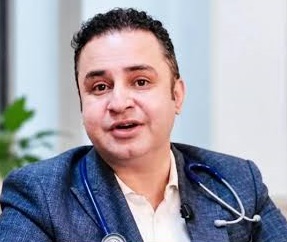
Medically Reviewed Content
Reviewed by: Dr. Sushil Sitaula (MBBS, MD - Internal Medicine)
Last medical review: June 1, 2026
Next scheduled review: December 1, 2026
This content follows evidence-based medical guidelines and is regularly updated to reflect current medical practices.
Top Modern Lab in Nepal — What to Know
- Correct testing matters: the right method for the condition determines accuracy.
- Interpretation requires context: window periods and confirmatory testing matter.
- A positive needs follow-through: treatment is part of the pathway, not just the report.
Laboratory Standards in Nepal
- Validated methods — testing run through controlled processes, not improvised.
- Correct specimens — site-matched sampling; a good lab on a wrong specimen is a wrong result.
- Interpreted results — numbers come with clinical meaning, not just a report.
- Transparent turnaround — realistic result times confirmed before sampling.
What a Modern Laboratory Actually Provides
A modern laboratory is not defined by its equipment list — it is defined by whether right test is run on right specimen at right time, with results that are interpreted rather than merely reported. Thamel Clinic uses validated laboratory processes covering infections and general health markers that matter for our patients.
For sexual health, that means NAAT/PCR for chlamydia, gonorrhea and lesion-based herpes diagnosis; fourth-generation antigen/antibody testing for HIV; two-test serology for syphilis; hepatitis B and C markers; and correct specimen selection — site-matched swabs where exposure was throat or rectal, not a urine test that cannot see them.
For general health, laboratory covers diagnostic range a community clinic should provide — hematology, biochemistry, hormonal assays, urinalysis, and markers that support fertility, thyroid, liver, kidney, lipid and glucose evaluation — all run through validated processes with quality control.
This page covers Top Modern Lab in Nepal in Kathmandu — confidential, non-judgmental care. Correct evaluation comes first: the actual condition or need determines which approach is appropriate, and the plan is matched to the real cause rather than generic advice. The top modern laboratory in Nepal provides the complete testing spectrum — NAAT for bacterial STIs, serology for viral STIs, general panels — with modern equipment and correct interpretation.
Sexual Health Laboratory
The STI laboratory covers main infections with methods that fit them: chlamydia and gonorrhea by NAAT on site-matched specimens (first-catch urine for urethral; throat and rectal swabs for those exposures — urine alone misses most extragenital infection), HIV by fourth-generation antigen/antibody testing with confirmatory pathway, syphilis by two-test serology, hepatitis B and C by serology with confirmatory markers, herpes by lesion PCR or typed serology, and trichomoniasis, mycoplasma and other organisms by NAAT where indicated.
The laboratory supports full pathway: test itself, honest window-period guidance, interpretation against clinical picture, and confirmatory testing where a screening result needs it.
NAAT for CT/GC
~95%+ sensitivity on correct site-matched specimen.
HIV 4th-Gen
Antigen/antibody screen with confirmatory pathway.
Syphilis Two-Test
Screening plus treponemal confirmation — correct algorithm.
Lesion PCR
Fresh-lesion swab — most reliable acute herpes diagnostic.
General Health Laboratory
Beyond STI testing, laboratory covers general diagnostic range: hematology (full blood count and related), biochemistry (liver function, renal function with eGFR, glucose and HbA1c, lipids, electrolytes), hormonal assays (thyroid function, reproductive hormones including AMH and testosterone), urinalysis, and inflammatory markers.
These support services around sexual health — fertility work-ups, prenatal screening, sexology consultations where hormonal causes are possible, and general health assessment — so a consultation does not fragment into multiple laboratory visits across city.
Hematology
FBC and related — baseline diagnostic panel.
Biochemistry
Liver, renal/eGFR, glucose/HbA1c, lipids, electrolytes.
Hormones
TSH and reproductive hormones — fertility and endocrine context.
Urinalysis & Markers
Urine studies and inflammatory markers.
Quality & Process
Validated testing is a process, not a machine: correct specimen identification and collection, controlled storage and transport, standardized assays run against quality controls, and review before release. Where laboratory is external or reference-based, chain is maintained and turnaround is stated honestly.
Results are reviewed before reporting — an abnormal result that does not fit clinical picture is queried rather than released blindly, and critical results are flagged for prompt clinical attention. This is less visible half of laboratory quality; specimen and process together determine whether a result can be trusted.
Correct Collection
Right specimen, right technique, right identification — foundation.
Controlled Process
Standardized assays with quality control — not improvised.
Reviewed Results
Results checked against clinical picture before release.
Honest Turnaround
Realistic result times — confirmed before sampling.
Interpreted, Not Just Reported
The laboratory's job is not finished when a number is produced. A result means something in context — window period for an STI test, reference range for patient's age and sex, confirmatory pathway for a reactive screen, retest interval for a borderline value.
Every result from clinic comes with that interpretation: what it means, whether it needs confirmation, whether retesting at a different interval is advised, and what next step is. A laboratory result without interpretation is half a service.
Contextual Meaning
Results read against timing, reference ranges and your situation.
Confirmatory Steps
Reactive screens confirmed before conclusions are drawn.
Retest Guidance
Where timing or borderline results warrant a repeat.
Clear Next Step
Every result arrives with what to do about it.
Top Modern Lab in Nepal
Correct testing
The correct method matched to the condition — NAAT, serology, or molecular.
Correct interpretation
Results read in context — window periods, confirmatory testing.
Treatment pathway
Positive results lead to correct treatment, not just a report.
Follow-up
Retesting and monitoring where indicated — confirms cure.
Laboratory & Costs
| Service | What It Includes | Cost (NPR) |
|---|---|---|
| STI panel | NAAT and serology — site-matched where relevant | Lab rate |
| General panel | Hematology, biochemistry, hormones, urinalysis | Lab rate |
| Confirmatory testing | Where screening results need confirmation | Lab rate |
| Consultation | Result interpretation and next-step advice | Rs. 450 |
Transparent pricing; confirm turnaround when booking.
Why Thamel Clinic Laboratory
- Validated methods — controlled, standardized testing — not improvised.
- Correct specimens — site-matched sampling for STI testing.
- Interpreted results — clinical meaning, not just numbers.
- Honest turnaround — realistic times stated before sampling.
- Linked care — results connect to treatment and follow-up.
Relevant Specialist Expertise
These clinicians provide care within their scope of practice at our clinic.
Dr. Sushil Sitaula
Consultant in Internal Medicine
Nepal Medical Council Registration No. 6973
Dr. Sushil Sitaula is a Consultant in Internal Medicine with a special interest in sexual health. He holds an MBBS and an MD in Internal Medicine and is registered with the Nepal Medical Council (Registration No. 6973).
Key Expertise
Frequently Asked Questions
Are your tests accurate?
Validated methods run correctly — but accuracy also depends on right specimen and right timing, which we explain honestly.
How long do results take?
It varies by test — turnaround is confirmed when you book; faster is not always better.
Do you just report numbers?
No — every result comes with interpretation: what it means, whether confirmation is needed, and what next step is.
Is a positive STI result confirmed?
Yes — reactive screens are confirmed on a separate pathway before diagnosis.
Can I bring tests ordered elsewhere?
You can discuss results from other laboratories at a consultation — we interpret them honestly including whether a repeat is indicated.
Is laboratory confidential?
Yes — specimens, results and records are handled privately throughout.
What does the service provide?
Correct testing or care matched to the condition — with treatment and follow-up.
Is the service confidential?
Yes — private and non-judgmental throughout.
Still have questions? Contact us or book an appointment for personalized guidance.
Related Services & Guides
Related Health Guides
Medical Disclaimer
Important information about using this medical website
Educational Purpose Only
The information provided on this website, including all text, graphics, images, and other material, is for informational and educational purposes only. It is not intended to be a substitute for professional medical advice, diagnosis, or treatment.
No Doctor-Patient Relationship
Use of this website does not create a doctor-patient relationship. The information provided is not tailored to your specific medical condition or health needs. Always seek the advice of your physician or other qualified health provider with any questions you may have regarding a medical condition.
Emergency Situations
If you think you may have a medical emergency, call your doctor or emergency services immediately. In Nepal, call 102 for emergency services or go to the nearest hospital emergency room.
Emergency Contact Information:
National Emergency:
102 (Ambulance)
Our Clinic:
+977-9700682800 (WhatsApp available 24/7)
Bir Hospital Emergency:
+977-1-4412400
TU Teaching Hospital:
+977-1-4434320
Timeliness of Information
Medical information changes rapidly. While we strive to provide current and accurate information, we make no guarantees about the completeness, accuracy, reliability, suitability, or availability with respect to the website or the information contained on the website.
Professional Medical Advice Required
Never disregard professional medical advice or delay in seeking it because of something you have read on this website. If you have any specific questions about any medical matter, you should consult your doctor or other professional healthcare provider.
Treatment and Diagnosis
Do not use the information on this website to diagnose or treat any health problem or disease. The descriptions of treatments and medications provided are for general informational purposes only and do not constitute medical advice.
Limitation of Liability
In no event shall we be liable for any loss or damage arising from the use of this website or reliance on the information provided herein. This includes, but is not limited to, direct, indirect, incidental, punitive, and consequential damages.
Nepal-Specific Considerations
This website is operated in Nepal and is intended for users in Nepal. The medical information provided may not be applicable to healthcare systems outside Nepal. Always consult with local healthcare providers familiar with Nepal's healthcare system and regulations.
Last Updated: November 20, 2026 |Clinic: Thamel Clinic |Licensed: Registered