
Sexologist for Sexual Behavior Problems in Kathmandu Honest Assessment, Real Treatment
Sexual behavior problems range from compulsive patterns that damage daily life to concerning atypical behaviors. A sexologist provides confidential, non-judgmental assessment and evidence-based treatment at Thamel Clinic.
Medically Reviewed Content
Reviewed by: Thamel Clinic Clinical Team (MBBS, MD)
Last medical review: November 8, 2026
Next scheduled review: May 8, 2027
This content follows evidence-based medical guidelines and is regularly updated to reflect current medical practices.
When to Seek Help Immediately
- Any sexual behavior involving coercion, non-consent or minors requires urgent specialist intervention and may have legal implications.
- If compulsive sexual behavior is accompanied by suicidal thoughts, severe depression or substance dependence, seek mental health care urgently.
- Risky sexual behavior that exposes you or partners to HIV or other STIs needs immediate testing and medical review.
- Behavior that feels completely out of control and is escalating should not wait — early intervention prevents deeper patterns.
Sexual Behaviour Care in Nepal
- Stigma is the biggest barrier — Sexual behavior concerns are rarely discussed openly in Nepal, and many patients delay seeking help for years because of shame or fear of being labeled.
- Low awareness of compulsive sexual behavior — Many Nepali patients and even some clinicians do not recognise compulsive sexual behavior as a treatable condition, so it is often misdiagnosed as depression or personality disorder.
- Mental health comorbidity is common — Anxiety, depression and substance use frequently coexist with sexual behavior problems, which means treatment must address the whole picture rather than the behavior alone.
- Relationship and marital pressure — In Nepali society, sexual issues are often framed as marital failure, so patients benefit from couples-inclusive approaches that do not assign blame.
- CBT availability is growing — Kathmandu now has access to trained counselors offering CBT for behavioral and sexual concerns, though specialist sexology services remain concentrated in private clinics.
- Confidentiality matters doubly — Because sexual health records can carry severe social consequences in Nepal, private consultation with secure record-keeping is essential for honest disclosure.
When Sexual Behavior Becomes a Problem
Sexual behavior problems cover a wide spectrum: compulsive sexual behavior where a person feels unable to control urges despite negative consequences, distressing or impairing patterns that affect work, relationships or health, and atypical sexual interests that may cause harm or involve non-consenting parties. The important clinical principle is that not every unconventional sexual interest is a disorder — the dividing line is distress, impairment or harm to others.
Compulsive sexual behavior disorder — recognised in ICD-11 and discussed as a diagnosis in its own right — describes a persistent pattern of failure to control intense sexual urges, resulting in marked distress or significant impairment in personal, family, social or occupational functioning. It shares features with other behavioral addictions: escalating frequency, unsuccessful attempts to cut back, and continued behavior despite consequences.
The causes are usually multifactorial: underlying anxiety, depression or trauma; early adverse experiences; substance use; relationship difficulties; and sometimes neurobiological factors. Effective treatment rarely involves medication alone — cognitive behavioral therapy, addressing underlying mood disorders, and sometimes couples or family work produce better outcomes than any single approach.
This page explains how compulsive and atypical sexual behaviors are assessed, what distinguishes a disorder from a normal variant, how treatment works in practice, and how to access confidential sexology care in Kathmandu. It also addresses the fear of judgment that keeps many people from seeking help.
Types of Sexual Behavior Problems
Compulsive sexual behavior involves persistent, intense sexual urges or behaviors that the person cannot control despite wanting to, causing significant distress or impairment. Typical patterns include escalating pornography use, repeated engagement in risky sex despite intentions to stop, and spending excessive time on sexual activities at the expense of work, family or health. It is best understood as a behavioral addiction rather than a moral failing.
Atypical sexual interests — paraphilias — range from harmless variations to patterns involving harm or non-consent. A paraphilia only becomes a disorder when it causes distress to the person, impairs functioning, or involves harm to others or non-consenting individuals. Many people with unconventional interests function well and do not need treatment; the clinical question is always about harm and distress, not about the content of the fantasy itself.
- Compulsive sexual behavior — inability to control urges despite consequences.
- Escalating pornography use that interferes with daily life.
- Risky sexual behavior despite intentions or promises to stop.
- Atypical sexual interests that cause distress or impairment.
- Behaviors involving non-consenting parties — these require urgent intervention.
- Sexual behavior driven by underlying anxiety, trauma or mood disorder.
Compulsive sexual behavior disorder
A persistent failure to control intense sexual impulses causing marked distress or impairment — recognised in ICD-11 and treatable with therapy.
Paraphilia versus paraphilic disorder
An atypical sexual interest is not automatically a disorder. It becomes one only when it causes distress, impairs life, or involves harm to others — many paraphilias are benign variants.
When behavior harms others
Any sexual behavior involving coercion, non-consent or children is a serious matter requiring immediate specialist intervention and, where appropriate, legal involvement.
Underlying drivers
Compulsive sexual behavior often masks anxiety, depression, trauma or relationship problems — treating only the behavior without the driver leads to relapse.
How a Sexologist Assesses the Problem
Assessment begins with a confidential, non-judgmental history. The clinician asks about the pattern of behavior — frequency, triggers, consequences — and about the impact on work, relationships, finances and health. They also screen for underlying conditions such as depression, anxiety, substance use and trauma, because these frequently drive or coexist with the sexual behavior problem.
Physical examination and laboratory testing may be included where relevant: hormone levels, STI screening, and general health checks can all contribute to understanding whether a medical factor is involved. For compulsive behavior, validated screening tools such as the Compulsive Sexual Behavior Disorder scale may be used to gauge severity and track progress over treatment.
The assessment ends with a formulation — an explanation of what is driving the behavior and what is maintaining it — and a treatment plan. This formulation is shared openly with the patient because understanding the mechanism is itself therapeutic: it replaces shame with a workable model of the problem.
- Confidential history of behavior patterns, triggers and consequences.
- Screening for depression, anxiety, substance use and trauma.
- Physical examination and laboratory tests where indicated.
- Validated scales to measure severity and track progress.
- A clear formulation shared with the patient.
- Individual or couples treatment plan agreed together.
No judgment zone
The consultation is explicitly non-judgmental — the clinician needs honest information to help, and shame only blocks accurate assessment.
Looking for the driver
Compulsive behavior is rarely random — assessment focuses on triggers such as stress, boredom, relationship conflict or underlying mood disorder.
Measuring severity
Standardised scales let clinician and patient track whether treatment is working, rather than relying on vague impressions.
Medical causes excluded
Hormonal, neurological and substance-related factors are ruled out where relevant, because they change the treatment approach.
Treatment Approaches That Work
Cognitive behavioral therapy is the backbone of treatment for compulsive sexual behavior. CBT helps patients identify triggers, challenge the beliefs that drive the behavior, develop alternative coping strategies, and rebuild control over impulses. Mindfulness-based approaches and urge-surfing techniques are often integrated because they teach patients to observe urges without acting on them.
Underlying conditions must be treated in parallel: depression may need antidepressants, anxiety may need therapy or medication, and substance use needs its own plan. Relationship difficulties — often both a cause and a consequence — are addressed through couples counseling where both partners are willing. Group therapy with others facing similar struggles can reduce isolation and shame.
For atypical sexual interests that cause distress but do not involve harm, therapy focuses on acceptance and management rather than elimination — the goal is a life the patient is comfortable with, not the eradication of fantasy. Where behavior involves risk to others, treatment prioritises safety and accountability above all else.
- CBT to identify triggers, challenge beliefs and rebuild impulse control.
- Mindfulness and urge-surfing techniques for managing cravings.
- Treatment of underlying depression, anxiety or substance use.
- Couples counseling where relationship issues are involved.
- Group therapy for peer support and reduced isolation.
- Safety-first planning where behavior involves risk to others.
CBT is the core treatment
Cognitive behavioral therapy addresses the thoughts, triggers and habits that sustain compulsive sexual behavior — it is the most evidence-supported approach.
Treat the whole person
Underlying anxiety, depression or substance use must be addressed alongside the sexual behavior, or relapse is likely once the surface behavior is controlled.
Couples work matters
Many sexual behavior problems damage relationships; couples counseling rebuilds trust and communication that individual therapy alone cannot restore.
Acceptance over elimination
For distressing but harmless atypical interests, the goal is management and acceptance — a fulfilling life — not the impossible task of erasing fantasy.
Accessing Care in Kathmandu
Sexology services in Kathmandu are available through private clinics, hospital psychiatry departments and some NGO mental health programs. Private sexology clinics offer the most direct route: a consultation with a doctor trained in sexual medicine, followed by structured therapy sessions. Costs vary by clinic and by whether sessions are with a doctor or a counselor.
At Thamel Clinic, sexual behavior problems are assessed by doctors experienced in sexual health and managed with evidence-based approaches including CBT and medication where indicated. Sessions are confidential, appointments are private, and patients can begin with a single consultation to discuss concerns without committing to a full treatment program.
Online consultation is also available for patients who prefer not to attend in person — particularly useful for those in other parts of Nepal or for initial discussions that feel too sensitive for a first face-to-face meeting. Follow-up can be arranged in person or remotely depending on progress and preference.
- Private sexology clinics in Kathmandu offer confidential specialist care.
- Hospital psychiatry departments provide mental health support for complex cases.
- Initial consultation can be a single session to discuss concerns.
- Online consultation available for patients outside Kathmandu or preferring remote care.
- CBT sessions can be with a trained counselor or doctor.
- Couples counseling available for relationship-focused presentations.
Where to start
A single confidential consultation is enough to begin — no commitment to a long program is needed to discuss concerns honestly.
Private clinic versus hospital
Private clinics offer direct access to sexology specialists; hospital psychiatry may be better for severe comorbid mental illness requiring multidisciplinary care.
Online option
Remote consultation suits patients elsewhere in Nepal or anyone who prefers to start with a phone or video call before attending in person.
Cost transparency
Consultation and session fees are explained upfront, with no hidden charges — patients can decide on treatment after understanding the plan.
Breaking the Cycle: What Recovery Looks Like
Recovery from compulsive sexual behavior is not about willpower — it is about understanding triggers, building alternative coping strategies, and treating whatever is driving the behavior underneath. Most patients see meaningful improvement within weeks of starting structured therapy, though sustained change typically takes months of consistent work.
Relapse is common and should be treated as part of the process rather than a failure. The goal is not perfect abstinence but increasing control: longer gaps between urges, better responses to triggers, and reduced harm. Many patients find that addressing the underlying anxiety or relationship problem makes the sexual behavior problem fade as a secondary issue.
Long-term, patients who maintain recovery usually combine several strategies: ongoing therapy or booster sessions, healthy relationship building, stress management, and sometimes medication for comorbid conditions. Support groups — online or in person — provide peer accountability that many find essential.
- Recovery means increasing control, not perfect abstinence.
- Relapse is normal and part of the process — it informs the next step.
- Underlying drivers must be treated for lasting change.
- Most patients improve within weeks of starting therapy.
- Ongoing support — therapy, groups, stress management — sustains recovery.
- Relationships often improve as control and honesty return.
Willpower is not the answer
Compulsive behavior responds to structured therapy, not to promises to oneself — understanding triggers and building alternatives is what actually changes the pattern.
Relapse is data, not failure
A lapse tells the clinician what trigger was missed; it is used to refine the plan rather than to judge the patient.
The timeline
Meaningful improvement typically begins within weeks, but sustained change takes months — patients should expect a process, not an instant fix.
Support systems matter
Peer support groups and ongoing therapy reduce isolation and provide accountability that solo willpower cannot match.
Sexual Behaviour Services & Costs
| Service | What It Includes | Cost (NPR) |
|---|---|---|
| Initial consultation | Confidential assessment by a doctor experienced in sexual health. | Rs. 450 |
| Follow-up consultation | Review of progress and adjustment of treatment plan. | Rs. 400 |
| CBT counseling session | Structured therapy with a trained counselor or doctor. | Rs. 800–1,500 per session |
| Couples counseling | Joint sessions addressing relationship impact and trust. | Rs. 1,500–2,500 per session |
| Online consultation | Remote video or phone consultation for follow-up or initial assessment. | Rs. 400–800 |
| Psychiatric evaluation | Assessment for underlying depression, anxiety or other conditions. | Rs. 600–1,200 |
| Medication review | Prescription and monitoring for comorbid conditions where indicated. | Per prescription |
Indicative NPR pricing at Thamel Clinic. Session fees depend on whether treatment is with a doctor or counselor; packages are available for multi-session plans.
Why Patients Choose Thamel Clinic
- Explicitly non-judgmental — sexual behavior concerns are discussed openly and without moral judgment, which is the only way honest assessment happens.
- Evidence-based treatment — CBT, medication where indicated, and couples work are used according to what the evidence supports.
- Whole-person assessment — underlying anxiety, depression, trauma and substance use are screened for and treated alongside the sexual behavior.
- Confidential by design — private consultations, secure records and discreet scheduling protect patient privacy in a small community.
- Couples-inclusive options — relationship-focused presentations can be addressed with both partners in session.
- Online accessibility — remote consultations make care available to patients across Nepal who cannot attend in person.
- Transparent pricing — fees are explained before treatment begins, with no pressure to commit to a long program.
Relevant Specialist Expertise
These clinicians provide care within their scope of practice at our clinic.
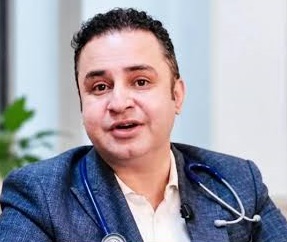
Dr. Sushil Sitaula
Consultant in Internal Medicine
Nepal Medical Council Registration No. 6973
Dr. Sushil Sitaula is a Consultant in Internal Medicine with a special interest in sexual health. He holds an MBBS and an MD in Internal Medicine and is registered with the Nepal Medical Council (Registration No. 6973).
Key Expertise
Frequently Asked Questions
Is compulsive sexual behavior a real disorder?
Yes. Compulsive sexual behavior disorder is recognised in ICD-11 and describes a persistent inability to control sexual impulses causing significant distress or impairment. It is a treatable condition, not a moral failing or a character weakness.
How is compulsive sexual behavior different from a high sex drive?
The difference is control and consequence. A high libido is a preference; compulsive behavior involves failed attempts to stop, escalating patterns, and continued behavior despite harm to work, relationships or health. Distress and impairment are the diagnostic markers.
Is porn addiction the same as sexual behavior problems?
Pornography use alone is not a disorder — many people use it without harm. It becomes a problem when use is compulsive, escalates, causes distress or interferes with daily functioning. The assessment focuses on control and consequences, not the content itself.
What causes sexual behavior problems?
Usually a combination of factors: underlying anxiety, depression or trauma; early adverse experiences; substance use; relationship difficulties; and sometimes neurobiological factors. Effective treatment addresses the driver, not just the behavior.
Is treatment confidential?
Yes. All consultations at Thamel Clinic are private and confidential. Records are secure, appointments are discreet, and nothing is shared without consent. Many patients find that the non-judgmental setting makes honest disclosure possible for the first time.
How long does treatment take?
Meaningful improvement typically begins within weeks of starting CBT, but sustained change usually takes months of consistent work. The timeline depends on severity, underlying conditions and whether couples or family work is involved.
Will I be judged for my sexual behavior?
No. The clinical approach is explicitly non-judgmental — the clinician needs accurate information to help, and shame only makes assessment harder. Patients are treated with the same respect regardless of the nature of their concerns.
What if my behavior involves someone who did not consent?
This is a serious matter requiring immediate specialist intervention. Treatment prioritises safety and accountability, and legal obligations may apply. The clinic can provide urgent assessment and coordinate with appropriate services.
Can couples counseling help with sexual behavior problems?
Yes, when both partners are willing. Many sexual behavior problems damage trust and communication; couples counseling rebuilds these while addressing the individual behavior. It is often more effective than individual therapy alone for relationship-focused presentations.
How much does treatment cost in Kathmandu?
Initial consultation is Rs. 450, follow-ups Rs. 400, and CBT sessions typically Rs. 800 to 1,500 depending on the practitioner. Couples sessions cost more. Online consultations are available at reduced rates for remote patients.
Is medication used to treat sexual behavior problems?
Medication is not the primary treatment for compulsive sexual behavior — CBT is the core approach. However, antidepressants or anti-anxiety medication may be prescribed for underlying conditions, and medication may be used in specific cases under specialist guidance.
What should I expect at the first appointment?
A confidential conversation about your concerns, a medical and sexual history, screening for underlying conditions, and possibly a physical examination. The goal is assessment and a plan — not judgment or immediate treatment.
Still have questions? Contact us or book an appointment for personalized guidance.
Related Services & Guides
Compulsive Sexual Behavior
Specialist care for CSBD and loss of impulse control.
Sexual Addiction
Assessment and treatment for addictive sexual patterns.
Internet Porn Dependency
When pornography use becomes compulsive and impairing.
Porn Addiction
Confidential assessment and CBT-based treatment.
CBT for Porn Addiction
Structured therapy program for compulsive use.
Excessive Masturbation
When masturbation becomes distressing or impairing.
Sexologist in Kathmandu
Find a confidential sexology specialist.
Book an Appointment
Schedule a private consultation at Thamel Clinic.
Related Health Guides
Medical Review & Sources
Medically reviewed by: Thamel Clinic Clinical Team (MBBS, MD)
Role: Sexual health and sexology clinical reviewers, Thamel Clinic, Kathmandu
Last reviewed: 2026-11-08
Reviewed against current WHO and ICD-11 guidance. This is general medical information; a registered clinician must assess each patient before treatment.
Medical information is general guidance only and does not replace an individual consultation. Treatment decisions are made after clinical assessment, including allergy and pregnancy review.
Medical Disclaimer
Important information about using this medical website
Educational Purpose Only
The information provided on this website, including all text, graphics, images, and other material, is for informational and educational purposes only. It is not intended to be a substitute for professional medical advice, diagnosis, or treatment.
No Doctor-Patient Relationship
Use of this website does not create a doctor-patient relationship. The information provided is not tailored to your specific medical condition or health needs. Always seek the advice of your physician or other qualified health provider with any questions you may have regarding a medical condition.
Emergency Situations
If you think you may have a medical emergency, call your doctor or emergency services immediately. In Nepal, call 102 for emergency services or go to the nearest hospital emergency room.
Emergency Contact Information:
National Emergency:
102 (Ambulance)
Our Clinic:
+977-9700682800 (WhatsApp available 24/7)
Bir Hospital Emergency:
+977-1-4412400
TU Teaching Hospital:
+977-1-4434320
Timeliness of Information
Medical information changes rapidly. While we strive to provide current and accurate information, we make no guarantees about the completeness, accuracy, reliability, suitability, or availability with respect to the website or the information contained on the website.
Professional Medical Advice Required
Never disregard professional medical advice or delay in seeking it because of something you have read on this website. If you have any specific questions about any medical matter, you should consult your doctor or other professional healthcare provider.
Treatment and Diagnosis
Do not use the information on this website to diagnose or treat any health problem or disease. The descriptions of treatments and medications provided are for general informational purposes only and do not constitute medical advice.
Limitation of Liability
In no event shall we be liable for any loss or damage arising from the use of this website or reliance on the information provided herein. This includes, but is not limited to, direct, indirect, incidental, punitive, and consequential damages.
Nepal-Specific Considerations
This website is operated in Nepal and is intended for users in Nepal. The medical information provided may not be applicable to healthcare systems outside Nepal. Always consult with local healthcare providers familiar with Nepal's healthcare system and regulations.
Last Updated: November 20, 2026 |Clinic: Thamel Clinic |Licensed: Registered