
Herpes Blood Test in Kathmandu — Serology The Typed Serology — the HSV-1 vs HSV-2 Antibodies — ~3–12 Week Window
Herpes blood testing at Thamel Clinic — type-specific serology (HSV-1 vs HSV-2) with the ~3–12 week window and honest interpretation.
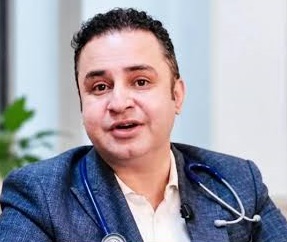
Medically Reviewed Content
Reviewed by: Dr. Sushil Sitaula (MBBS, MD - Internal Medicine)
Last medical review: June 1, 2026
Next scheduled review: December 1, 2026
This content follows evidence-based medical guidelines and is regularly updated to reflect current medical practices.
Herpes Blood Testing — What to Know
- Type-specific IgG is the correct blood test: detects past exposure.
- Cannot locate or date: the blood test answers "exposed?" not "where/when?"
- Lesion PCR for outbreaks: active sores are tested by PCR, not blood.
Herpes Blood Test in Kathmandu
- Typed serology — HSV-1 vs HSV-2 — antibodies detected.
- ~3–12 week window — antibodies take interval.
- For status — prior exposure or standing infection.
- Interpreted in context — chronic-infection framing.
The Herpes Blood Test — the Serology
The herpes blood test is type-specific serology — antibodies for HSV-1 vs HSV-2 — used for status question ( prior exposure, standing infection) where no lesion is present. The ~3–12 week window applies — antibodies take that long to develop after exposure.
The serology is status method — where no fresh lesion is present — typed result distinguishing the HSV-1 ( oral-associated, increasingly-common genital) from the HSV-2 ( genital-associated) for prognosis and counselling.
The honest framing: serology has interpretation context — a positive is prior exposure or standing infection ( not-infidelity-positive — long-standing-infection honesty), the ~50% asymptomatic shedding is transmission discussion, and managed-not-cured is chronic-infection framing.
A herpes blood test is type-specific IgG serology — the correct blood test for detecting past HSV exposure. It answers "have I been exposed to HSV-1 or HSV-2?" but cannot locate the infection (oral vs genital) or date it. The blood test is for asymptomatic screening; lesion PCR is for active outbreaks.
The Serology — the Typed Antibodies
The serology detects type-specific antibodies — the IgG for HSV-1 vs HSV-2 — status question ( prior exposure or standing infection) where no lesion is present. The typed result distinguishes the HSV-1 ( oral-associated, increasingly-common genital) from the HSV-2 ( genital-associated).
The serology is correct method for status question — prior exposure or standing infection — where no acute lesion is present to be lesion-PCR specimen.
Type-Specific Antibodies
HSV-1 vs HSV-2 — the IgG distinguished.
For the Status
The prior exposure or standing infection.
~3–12 Week Window
The antibodies take interval — biological constraint.
The Status Method
Where no lesion is present — serology.
The ~3–12 Week Window
The serology window is ~3–12 weeks — type-specific antibodies taking that long to develop after exposure — status question answered reliably at correct interval.
A serology at ~2 weeks is too-early inconclusive — antibodies not yet developed — correct timing being the ~3–12 week point where antibodies are present and serology answers status question.
~3–12 Week Window
The antibodies take interval — biological constraint.
Early = Inconclusive
A 2-week serology is too-early inconclusive.
Retest at Interval
The definitive test at correct day.
Timing Stated
Before test, not after.
The Serology vs the Lesion PCR
The serology is status method — antibodies detected where no lesion is present — vs lesion PCR which is acute diagnostic on a fresh sore (~2–12d — virus detected directly on shedding lesion).
The method is matched to presentation: a fresh sore is lesion-PCR case; a status question or an exposure-history is serology case — correct method for what is being asked.
Serology = Status
The antibodies — where no lesion is present.
Lesion PCR = Acute
The fresh sore — ~2–12d — direct detection.
Method by Question
The correct test for what is being asked.
Not Reflexively Same
The method matched to presentation.
The Interpretation — the Chronic-Infection Context
A positive serology is interpreted in chronic-infection context: herpes is managed not cured — antivirals (episodic or suppressive ~70–80%) control it — transmission discussion (~50% asymptomatic shedding — transmission possible without visible lesions), and not-infidelity honesty (a positive can be a long-standing infection, not a recent acquisition).
A negative is read against timing — a too-early serology is inconclusive — interpretation matching method and window.
Managed Not Cured
The antivirals control it.
~50% Asymptomatic Shedding
The transmission possible without visible lesions.
Not-Infidelity Honest
A positive can be prior, not recent.
Timing-Aware Negative
The honest read against method.
Herpes Blood Testing
Type-specific IgG
The correct blood test — detects past exposure to HSV-1 or HSV-2.
What it answers
"Have I been exposed?" — not where or when.
Cannot locate
HSV-1 positivity does not distinguish oral from genital infection.
Lesion PCR differs
For active outbreaks — PCR on the sore is the definitive test.
Herpes Testing & Costs
| Service | What It Includes | Cost (NPR) |
|---|---|---|
| Consultation | Assessment and method selection | Rs. 450 |
| Typed serology | HSV-1 vs HSV-2 — status question | Lab rate |
| Lesion PCR | Where a fresh sore is present | Lab rate |
| Treatment | Antivirals where indicated | Per case |
Transparent pricing; confirm when booking.
Why Thamel Clinic for Herpes Blood Test
- Typed serology — HSV-1 vs HSV-2 distinguished.
- Window-honest — ~3–12wk stated plainly.
- Method matched — serology for status; PCR for acute.
- Interpreted in context — chronic-infection framing.
- Confidential — private testing and results.
Relevant Specialist Expertise
These clinicians provide care within their scope of practice at our clinic.

Dr. Amrita Shrestha
Consultant Dermatologist and Venereologist
Dr. Amrita Shrestha is a Consultant Dermatologist and Venereologist and an MD Dermatology Gold Medalist from Tribhuvan University, Institute of Medicine, Maharajgunj Medical Campus. Her clinical work spans general and clinical dermatology, sexually transmitted infections, HIV-associated skin conditions, leprosy and neglected tropical diseases, and complex dermatological emergencies.
Key Expertise
Frequently Asked Questions
What is herpes blood test?
The typed serology — the HSV-1 vs HSV-2 antibodies — for status question.
When can I test for herpes?
The serology ~3–12 weeks for status; lesion PCR ~2–12d on a fresh sore.
Is a serology different from a PCR?
Yes — serology is antibodies ( status); the PCR is virus ( acute).
Is a positive herpes a diagnosis?
A chronic viral infection — managed not cured — context interpreted.
Is herpes curable?
Managed — antivirals control it; not cured.
Is it confidential?
Yes — private testing and results.
What does a herpes blood test detect?
Type-specific IgG — past exposure to HSV-1 or HSV-2.
Can a blood test tell me if I have genital herpes?
It detects exposure but cannot distinguish oral from genital — lesion PCR or clinical correlation is needed.
How do I book an appointment?
You can book online through the appointment page, call the clinic, or visit in person — same-day and walk-in slots are often available.
What happens after a positive result?
A positive result is followed by confirmatory testing where indicated, a clear explanation of the result, and a treatment plan — including partner notification guidance and retesting where appropriate.
Still have questions? Contact us or book an appointment for personalized guidance.
Related Services & Guides
Related Health Guides
Medical Disclaimer
Important information about using this medical website
Educational Purpose Only
The information provided on this website, including all text, graphics, images, and other material, is for informational and educational purposes only. It is not intended to be a substitute for professional medical advice, diagnosis, or treatment.
No Doctor-Patient Relationship
Use of this website does not create a doctor-patient relationship. The information provided is not tailored to your specific medical condition or health needs. Always seek the advice of your physician or other qualified health provider with any questions you may have regarding a medical condition.
Emergency Situations
If you think you may have a medical emergency, call your doctor or emergency services immediately. In Nepal, call 102 for emergency services or go to the nearest hospital emergency room.
Emergency Contact Information:
National Emergency:
102 (Ambulance)
Our Clinic:
+977-9700682800 (WhatsApp available 24/7)
Bir Hospital Emergency:
+977-1-4412400
TU Teaching Hospital:
+977-1-4434320
Timeliness of Information
Medical information changes rapidly. While we strive to provide current and accurate information, we make no guarantees about the completeness, accuracy, reliability, suitability, or availability with respect to the website or the information contained on the website.
Professional Medical Advice Required
Never disregard professional medical advice or delay in seeking it because of something you have read on this website. If you have any specific questions about any medical matter, you should consult your doctor or other professional healthcare provider.
Treatment and Diagnosis
Do not use the information on this website to diagnose or treat any health problem or disease. The descriptions of treatments and medications provided are for general informational purposes only and do not constitute medical advice.
Limitation of Liability
In no event shall we be liable for any loss or damage arising from the use of this website or reliance on the information provided herein. This includes, but is not limited to, direct, indirect, incidental, punitive, and consequential damages.
Nepal-Specific Considerations
This website is operated in Nepal and is intended for users in Nepal. The medical information provided may not be applicable to healthcare systems outside Nepal. Always consult with local healthcare providers familiar with Nepal's healthcare system and regulations.
Last Updated: November 20, 2026 |Clinic: Thamel Clinic |Licensed: Registered