
Accredited Modern Lab in Nepal — Quality-Assured The Quality-Assured Process — the Accreditation Plus the Correct Chain
An accredited modern laboratory at Thamel Clinic — quality-assured process ( accreditation, the QC, identification) on correct clinical chain.
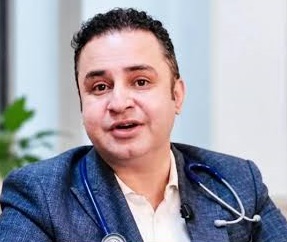
Medically Reviewed Content
Reviewed by: Dr. Sushil Sitaula (MBBS, MD - Internal Medicine)
Last medical review: June 1, 2026
Next scheduled review: December 1, 2026
This content follows evidence-based medical guidelines and is regularly updated to reflect current medical practices.
Accredited Lab — What to Know
- Accreditation means quality: ISO 15189 is the international standard for medical laboratories.
- Quality control is systematic: standardized processes produce reliable results.
- External assessment verifies: proficiency testing confirms ongoing quality.
Accredited Testing in Kathmandu
- Quality-assured process — accreditation, the QC, identification.
- Correct methods — the NAAT, lesion PCR, serologies.
- Chain determines correctness — specimen, timing, interpretation.
- Confidential — private testing and secure results.
The Accredited — the Quality-Assured Process
An accredited modern laboratory is quality-assured process on correct clinical chain — accreditation ( formal quality standard — the ISO or equivalent) plus process reliability ( barcode identification, automated processing, internal QC, digital reporting) — on correct chain ( right test, right specimen, right timing, interpretation).
The "accredited" is quality-assurance layer — formal process standard producing consistent reliable result — accreditation being external-verified quality, not just internal claim.
The honest framing: accreditation is process quality — consistent reliable handling — on top of correct clinical chain that determines what process can deliver — accredited-correct-chain being genuine quality.
This page covers Accredited Modern Lab in Kathmandu — confidential, non-judgmental sexual health care. Correct diagnosis comes first: symptoms and risk factors determine which tests are needed, and treatment is matched to the actual infection rather than generic advice. An accredited modern laboratory meets international quality standards — ISO 15189 accreditation, quality-controlled processes, and validated methods. Accreditation matters because it means the results are reliable, not just fast — the standard that distinguishes a real laboratory from a testing service.
The Accreditation — the Quality Standard
The accreditation is formal quality standard — the ISO or equivalent — externally-verified process quality ( documented procedures, competency assessment, internal QC, external proficiency testing) producing consistent reliable result.
The accredited process is quality-assurance layer — consistent handling, reduced error, externally-verified standard — quality being process producing same correct answer every time.
Formal Accreditation
The ISO or equivalent — external standard.
Documented Procedures
The standardized process — consistent handling.
Internal QC
The controls flagging drift before error.
External Proficiency
The external verification of competence.
The Correct Methods — the Validated
The methods are validated — the NAAT (~95% on correct specimen — molecular standard for bacterial), lesion PCR ( acute herpes ~2–12d — direct detection on shedding virus), automated serologies (the 4th-gen HIV ~2–4wk, syphilis two-test ~3–12wk, hepatitis markers).
The accredited quality applies on top of correct methods — validated methods on quality-assured process producing trustworthy result.
NAAT ~95%
The molecular standard — bacterial.
Lesion PCR
The acute herpes — ~2–12d.
Serologies
HIV 4th-gen, syphilis two-test, hepatitis.
Validated Methods
The correct test for each question.
The Chain — the Correctness the Accreditation Requires
The chain is correctness accreditation actually requires: right test ( method matched to question), right specimen ( site-matched — coverage exposure requires), right timing ( window respected — accurate answer), and interpretation ( clinical read — meaning included).
The honest framing: accredited quality is process layer — consistent reliable handling — on top of correct chain — an accredited wrong-chain test is an accredited wrong answer.
Right Test
The method matched to question.
Right Specimen
The site-matched coverage.
Right Timing
The window respected — accurate answer.
Interpreted
The clinical read — meaning included.
The Complete Accredited Service
The complete service: confidential consultation determines correct test and specimen, accredited process delivers validated test on quality-assured chain, result is interpreted against timing and coverage, and where positive management is at same service.
The accredited is combination — quality-assured process plus correct clinical chain — accreditation serving correctness, not replacing it.
Correct Testing
Site-matched, correctly-timed, right method.
Process Quality-Assured
The accreditation and the QC producing consistency.
Interpreted
The meaning included with result.
Linked to Care
Positive → same-service pathway.
Accredited Modern Lab
ISO 15189 accreditation
International quality standard for medical laboratories.
Quality-controlled processes
Standardized methods — consistent, reliable results.
Validated methods
Tests validated against reference standards.
External quality assessment
Participation in proficiency testing — ongoing quality verification.
Testing & Costs
| Service | What It Includes | Cost (NPR) |
|---|---|---|
| Consultation | Assessment and test selection | Rs. 450 |
| NAAT | Site-matched CT/GC — ~95% | Lab rate |
| Serology | HIV 4th-gen, syphilis two-test, hepatitis | Lab rate |
| Lesion PCR | Where a fresh sore is present | Lab rate |
Transparent pricing; confirm when booking.
Why Thamel Clinic for Accredited Testing
- Quality-assured process — accreditation, the QC, identification.
- Correct methods — validated tests on correct chain.
- Correct chain first — specimen, timing, interpretation intact.
- Interpreted — meaning included.
- Confidential — private testing and results.
Frequently Asked Questions
What is an accredited lab?
The quality-assured process — the ISO or equivalent — externally-verified quality standard.
Is an accredited lab accurate?
Where chain is correct — accreditation is process quality; chain determines correctness.
Does accreditation shortcut window?
No — windows are biological; accredited method at a wrong timing is still inconclusive.
Is it confidential?
Yes — private testing and results.
What if positive?
Interpreted, then linked to treatment at same service.
What does lab accreditation mean?
ISO 15189 accreditation — the international quality standard for medical laboratories.
Why does accreditation matter?
Accredited labs produce reliable results — validated methods, quality control, external assessment.
How do I book an appointment?
You can book online through the appointment page, call the clinic, or visit in person — same-day and walk-in slots are often available.
What happens after a positive result?
A positive result is followed by confirmatory testing where indicated, a clear explanation of the result, and a treatment plan — including partner notification guidance and retesting where appropriate.
Still have questions? Contact us or book an appointment for personalized guidance.
Related Services & Guides
Related Health Guides
Medical Disclaimer
Important information about using this medical website
Educational Purpose Only
The information provided on this website, including all text, graphics, images, and other material, is for informational and educational purposes only. It is not intended to be a substitute for professional medical advice, diagnosis, or treatment.
No Doctor-Patient Relationship
Use of this website does not create a doctor-patient relationship. The information provided is not tailored to your specific medical condition or health needs. Always seek the advice of your physician or other qualified health provider with any questions you may have regarding a medical condition.
Emergency Situations
If you think you may have a medical emergency, call your doctor or emergency services immediately. In Nepal, call 102 for emergency services or go to the nearest hospital emergency room.
Emergency Contact Information:
National Emergency:
102 (Ambulance)
Our Clinic:
+977-9700682800 (WhatsApp available 24/7)
Bir Hospital Emergency:
+977-1-4412400
TU Teaching Hospital:
+977-1-4434320
Timeliness of Information
Medical information changes rapidly. While we strive to provide current and accurate information, we make no guarantees about the completeness, accuracy, reliability, suitability, or availability with respect to the website or the information contained on the website.
Professional Medical Advice Required
Never disregard professional medical advice or delay in seeking it because of something you have read on this website. If you have any specific questions about any medical matter, you should consult your doctor or other professional healthcare provider.
Treatment and Diagnosis
Do not use the information on this website to diagnose or treat any health problem or disease. The descriptions of treatments and medications provided are for general informational purposes only and do not constitute medical advice.
Limitation of Liability
In no event shall we be liable for any loss or damage arising from the use of this website or reliance on the information provided herein. This includes, but is not limited to, direct, indirect, incidental, punitive, and consequential damages.
Nepal-Specific Considerations
This website is operated in Nepal and is intended for users in Nepal. The medical information provided may not be applicable to healthcare systems outside Nepal. Always consult with local healthcare providers familiar with Nepal's healthcare system and regulations.
Last Updated: November 20, 2026 |Clinic: Thamel Clinic |Licensed: Registered